
Highlighting the Impact of Marcela Okeke's Portrait Painting Program at JTDC
Marcela Okeke, Teaching Artist
Overview

In partnership with Stomping Grounds Literary Arts Initiative (SGLAI), figurative painter and
teaching artist Marcela (Marci) Okeke led a portrait painting residency for young people at the Cook County Juvenile Temporary Detention Center (JTDC). Funded through the Unlocked Voices / 3Arts Campaign, the program introduced youth to the foundations of portrait painting while encouraging self-expression, critical thinking, and artistic confidence.
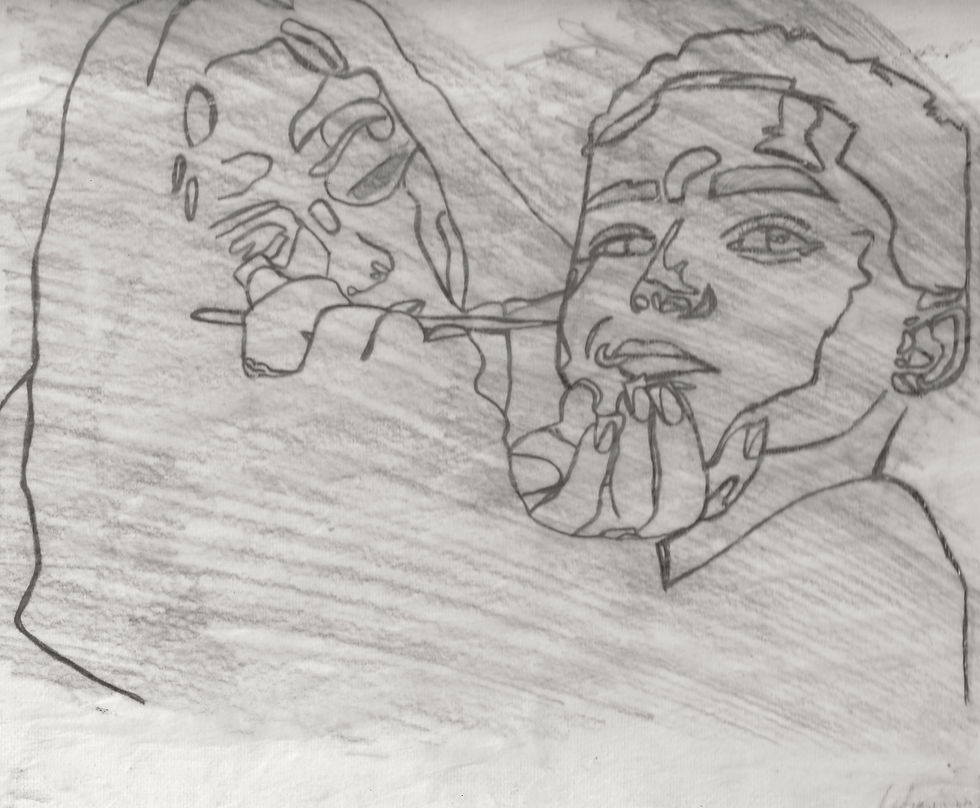
Drawing from her own experience as a young artist, Marci designed a curriculum focused on helping students understand the human face, light, shadow, and dimension. What began as a self-portrait class evolved into a student-centered exploration of identity through painting musicians and artists they admired.
The result was a classroom where young people who often claimed they "couldn't paint" created powerful portraits, supported one another's growth, and discovered new ways to express themselves through art.

Program Structure and Activities
Weekly Objectives
The portrait painting program combined technical skill-building with creative exploration. Core activities included:
Studying contemporary artwork by BIPOC artists and artists impacted by incarceration
Learning the planes of the face and facial proportions
Understanding light sources, highlights, and shadows
Practicing color mixing and color theory
Developing painting techniques through guided demonstrations
Creating original portrait paintings inspired by admired musicians
Peer teaching and collaborative learning
Classroom Approach
Each session began with discussion and observation.
Students analyzed artwork together, exploring questions such as:
What story is this artwork telling?
How does color affect mood?
What emotions do you see in the piece?
Marci then introduced technical painting concepts through demonstrations before transitioning into hands-on studio time.
Because youth attendance fluctuated from week to week, returning students often helped teach newcomers, creating a collaborative environment where learning became a shared responsibility.
Goals and Alignment with Learning Standards
Artistic and Creative Goals
The program focused on helping youth:
Understand portrait construction and facial anatomy
Develop observational drawing and painting skills
Learn how light and shadow create dimension
Build confidence through artistic practice
Express identity through portraiture
Complete a finished painting they could be proud of

Illinois Learning Standards
Fine Arts (Visual Arts)
Generating and developing artistic ideas through portrait creation
Refining and presenting original artwork
Responding to and analyzing contemporary artwork
Social Emotional Learning (SEL)
Building self-awareness through creative expression
Strengthening relationship skills through peer teaching
Developing perseverance through long-term projects
English Language Arts (ELA)
Participating in discussions and art critiques
Analyzing visual narratives and symbolism
Communicating ideas through artistic decision-making
Student Reflections and Highlights
One of the most powerful outcomes of the program was watching students shift from self-
doubt to confidence.
Many participants entered the classroom saying:
"I can't paint."
By the end of the residency, those same students had completed fully realized portrait paintings demonstrating an understanding of light, shadow, color, and form.
Breakthrough Moments
Around the third class, Marci began noticing a shift.
Students who had initially been quiet started openly sharing their excitement about the work. Their enthusiasm encouraged others to engage more fully and take creative risks.
One student proudly explained:
"I'm trying to make the lip come out, so I know I have to put shadow here."
For Marci, hearing students use artistic vocabulary and explain their decision-making signaled that they were truly internalizing the concepts.
Student Leadership
Several students emerged as leaders within the classroom.
Autumn became a positive role model, helping peers stay focused, assisting with conflict resolution, and independently completing additional artwork.

Aaliyah regularly welcomed new students, helped orient them to projects, and supported classmates who needed assistance.
Another student created an exceptional portrait of rapper Lotto that Marci described as "impeccable," demonstrating mastery of concepts introduced throughout the course.
Learning Insights
Art as a Mirror

Students gravitated toward painting contemporary musicians such as Lotto and NBA YoungBoy. Rather than simply recreating celebrity images, these portraits became reflections of identity, aspiration, and personal connection.
As Marci observed:
"They were creating altars to artists they admired and could see themselves in."
Building Confidence Through Skill Development
Students learned to:
Identify light sources
Create dimensional forms
Analyze color relationships
Understand facial structure
Develop patience and attention to detail
Perhaps most importantly, they learned that artistic ability is something that can be developed through practice.

Peer Teaching Creates Deeper Learning
Because youth frequently entered and exited the classroom, experienced students often taught newcomers.
This approach strengthened technical understanding while building leadership, collaboration, and community.
Challenges and Insights
Program Challenges
Attendance Fluctuation: Student attendance changed regularly due to the realities of the detention environment, requiring constant adaptation.
Limited Internet Access: All music, visual references, and resources needed to be downloaded and prepared in advance.
Security Restrictions: Materials and lesson plans often required modification to fit facility guidelines.
Emotional Variability: Students arrived each week carrying different experiences, requiring flexibility and responsiveness from the teaching artist.

Insights from the Program
Student Choice Drives Engagement. Allowing youth to select musicians they admired dramatically increased investment in the project.
Representation Matters: Students connected deeply with artists who reflected their identities and lived experiences.
Creative Freedom Builds Trust. Marci intentionally created a space where students were encouraged rather than pressured.
Teaching requires adaptability. Working inside JTDC challenged Marci to become more flexible, responsive, and creative as an educator.
As she reflected:
"Teaching here felt like exercising with resistance bands. It made me stronger."
Cross-Disciplinary Collaboration
The final weeks of the residency overlapped with poet and teaching artist Johnetta "Authentic" Anderson's Paint the Light poetry program.
Together, the artists facilitated a unique interdisciplinary experience where students completed portrait paintings while simultaneously exploring creative writing and spoken word.

The resulting artwork and poetry were later featured in the Locked Achievements Exhibition, allowing the public to celebrate the voices and talents of incarcerated youth.
How You Can Support Arts Education at JTDC
Programs like Marci's portrait painting residency are only possible because of supporters who believe in the transformative power of the arts.
You can help by:
Sponsoring a teaching artist residency
Providing art materials and supplies
Supporting public exhibitions featuring youth artwork
Sharing stories like this with your community
Your support helps create opportunities for young people to discover their talents, build confidence, and envision new possibilities for their futures.
Conclusion
Marcela Okeke's portrait painting residency demonstrated the power of visual arts education to foster creativity, confidence, and connection among youth at JTDC.
Through technical instruction, mentorship, peer collaboration, and artistic exploration, participants developed both practical artistic skills and a stronger belief in their own abilities.
The program reminds us that when young people are given the tools, support, and freedom to create, they often exceed expectations, not only as artists but as leaders, collaborators, and storytellers.
By investing in programs like this, we help ensure that more young people have opportunities to see themselves, their experiences, and their futures reflected through art.


Comments